
Menstrual Complaints
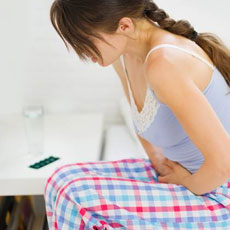 Menses can affect a woman's mood throughout her lifetime. Sometimes the impact on mood can affect a woman's quality of life. Many times the symptoms that result can be managed with Ayurvedic internal medicine and/or Panchkarma therapies.
Premenstrual mood changes
Once a young woman starts menstruating, she may begin to experience emotional changes around the time of her period. 75% of women with regular period cycles report unpleasant physical or psychological symptoms before their periods. Premenstrual syndrome or PMS affects 30% to 80% of women.
Psychological symptoms of PMS |
Physical symptoms of PMS |
 Anger Anger |
Sleep disturbance |
| Irritability |
Increased appetite |
| Anxiety |
Abdominal bloating |
| Sensitivity to rejection |
Breast tenderness |
| Sense of feeling overwhelmed |
Headaches (sometimes known as menstrual migraines) |
| Social withdrawal |
Muscle aches and joint pain |
| Swelling of extremities |
Premenstrual Dysphoric Disorder or PMDD is a more severe form of PMS. It affects 30% to 80% of women of reproductive age.
Symptoms of PMDD include:
Severe Irritability
Depression
Anxiety
Mood Swings
The causes of PMS and PMDD are not known, but research shows that they are based in the Body as well in the Mind. Women who experience PMS and/or PMDD do not have higher levels of hormones compared to other women. Instead, women with PMS and/or PMDD may be extra sensitive to normal hormonal changes.
Testimonials
Patients Name: Miss S.Khedgikar (28)
(Pune)
(Irregular Menses & Obesity)
I came to Dr. Aarti in February 2015, for my Irregular Menses and Obesity. Before five years my weight was 62 kg, but due to my personal stress and job schedule my Menses was Irregular (2-3 months). Along with this I was facing Fissures, Dry & Patchy Skin,...
Read More
Treatments:
Internal Medication given by our centre help the female in any age group (from menarchae to menopause) for menstrual complaints, PMS (Pre menstrual Syndrome) and PMDD.
Ayurvedic formulation of natural Iron and Calcium which is derived from natural resources in nature to reduce PMS symptoms and also will be effective in Total Female Health (Skin care, Hair care, Weight, Indigestion and etc.)
Selective Internal Medicines, External and Internal Panchkarma Therapies will take care of your Easy Digestion, Menstruation, Nutritional Deficiencies, Maintenance of good Mental State and your physique.
To support them with the help of Counseling sessions accordingly.
Hormonal Balancing Treatments which will give new life to Thyroid, Ovaries and other Female organs.
Lifestyle changes may help make the symptoms of PMS and PMDD better. We suggests that women:
Yoga, Pranayam and Meditation
Eat lesser amounts of caffeine, sugar and sodium
Avoid Smoking and Alcohol
Get plenty of sleep
Exercise more
Try counseling
For all women, simple lifestyle changes in diet, exercise and stress management are usually encouraged. These changes do not have risks and may help you.
Amenorrhoea
Amenorrhoea is defined as absence of menses. This is a normal (physiological) occurrence in girls before puberty (menarche), during pregnancy and breastfeeding (lactation) and following menopause. But failure to menstruate after puberty is called Amenorrhoea.
Causes |
|
| Pregnancy or breast-feedin |
Being very underweight caused by serious illness. |
| Extreme overweight (obesity). |
Developmental problems, such as the absence of the uterus or vagina. |
| Hormone imbalance produced by the hypothalamus/ pitutary disease |
Excessive amounts of the male hormone- testosterone. |
| Improper functioning of the ovaries. |
Intrauterine infection or endometritis. |
| Premature Menopause |
Chromosomal abnormality |
| Discontinuation of oral contraceptives. |
Diseases such as diabetes mellitus or tuberculosis. |
| Eating disorders. |
Stress or psychological disorders. |
| Excessive exercise. |
Drug abuse |
Menorrhagia
Menorrhagia is unusually heavy or long menstrual periods. Menorrhagia can be a cause for concern because heavy bleeding can lead to an iron deficiency, and ultimately result in anemia. It may sometimes be accompanied by other symptoms, which may indicate that an underlying condition is present like acne, excessive hair growth and rapid weight gain.
According to Ayurveda, Vata is the main dosha responsible for this menstrual disorder. This disorder can be temporary or permanent. The disorder can even interfere with a woman's ability to get involved in routine activities like attending work and sleep.
Causes |
|
| The use of certain forms of contraception - Intrauterine devices (IUDs) |
A disorder in which the tissue that lines the uterus becomes implanted outside the uterus(Endometriosis). |
| Uterine disorders, fibroids. |
Adenomyosis is a condition in which glands from the endometrium become implanted in the uterine muscle and may cause unusually heavy periods. |
| Thyroid disorders. Having a slow thyroid (hypothyroidism) can lead to menorrhagia |
Medications. The use of certain medications (e.g., anticoagulants, anti-inflammatory medications) may cause hormonal imbalances, resulting in heavy bleeding. |
Dysmenorrhoea
Dysmenorrhoea, also known as painful periods or menstrual cramps, is pain during menstruation. It usually begins in the pelvis or lower abdomen, may include back pain, diarrhea or nausea. In young women painful periods often occur without any underlying problem, in older women it is more often due to an underlying issues such as uterine fibroids, adenomyosis or endometriosis.
Many women never seek medical attention for dysmenorrhea. Self-medication with analgesics and nonsteroidal anti-inflammatory drugs (NSAIDs) and direct application of heat are common effective strategies.
Causes
In Ayurvedic view, generally menstrual problems are due to aggravation of Vata and Pitta doshas. A variety of causes may be responsible for this condition, however blood deficiency and increased toxicity in the body are the main causes.
White Discharge (Leucorrhoea)
Excessive discharge of a white, sticky, foul-smelling material from the vagina is called Leucorrhoea. This common problem may occur due to unhygienic conditions, infection of the genital tract or impaired immune function. In Ayurveda, Leucorrhoea is known as Shveta Pradar, where Shveta means ‘white’ and Pradar means ‘discharge’.
Causes
Excessive intake of heavy
oily, cold, sweet and dense foods
consumption of too much milk, butter, yogurt and cheese
overindulgence in sexual activity
repeated abortions or miscarriages
following improper diet and lifestyle during menstrual cycles
improper vaginal hygiene can cause leucorrhoea
Symptoms
Pain in the lumbar region
Weakness
Irritation and itching in the genital area
According to Ayurveda, the causative factors (especially food) mentioned above can result in aggravation of Kapha Dosha. This increased Kapha, along with other factors, can impair the Rasa\Dhatu (nutrient plasma) present in the vaginal tract, ultimately leading to the painless discharge of white colored fluid from the vagina.